
By Ashlee Casey
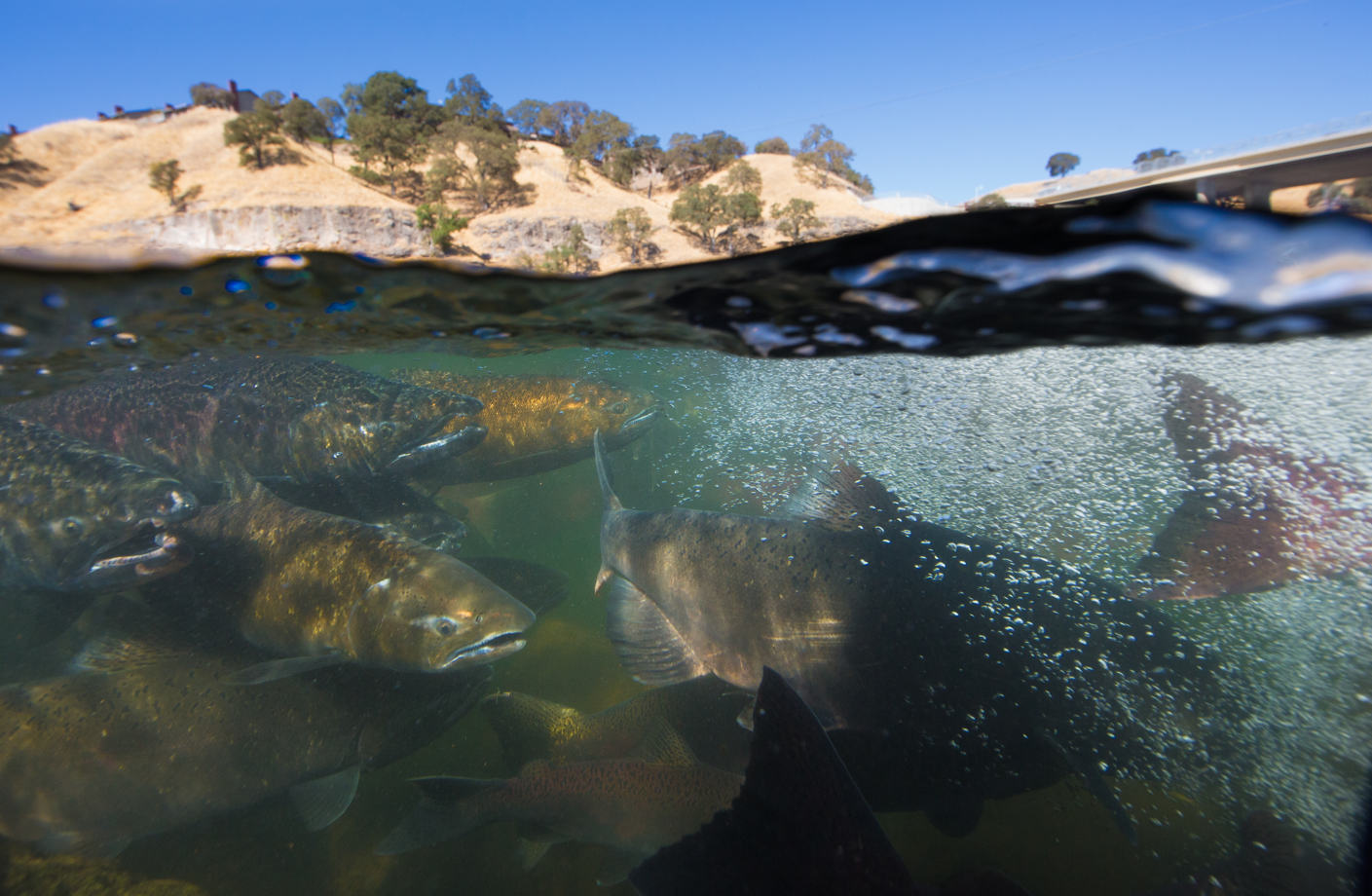
Each fall, the Lower American River comes alive as Chinook salmon return to spawn and steelhead begin their migration. Behind these natural rhythms lies careful management—guided by the Water Forum’s Flow Management Standard, now in its 20th year.
Developed in collaboration with state and federal agencies, the Water Forum’s science-based standard sets targets for minimum river flows and storage in Folsom Reservoir. It was created with multiple goals in mind: to protect anadromous fish from unhealthy warm river temperatures, to provide adequate flows to maintain access to important fish habitat, and to avoid catastrophic water shortages for the region’s communities. Taken together, these objectives also support overall river health—helping maintain water quality, recreational value, and the long-term resilience of the American River corridor.
The standard is guided by adaptive management, with built-in flexibility to respond to changing conditions and evolving science. In 2015, we refined the flow standard to better respond to drought cycles. Among other improvements, the modified standard sets an end-of-December storage planning minimum and adjusted recommended flows based on the annual hydrology.
Now, after two decades of study and refinement, the results are clear: The Water Forum’s flow standard remains the best tool we have for protecting water supplies and sustaining fish populations in a highly altered river system, especially as we face the challenges we know are coming with climate change. It is also a critical tool for protecting the overall health of the Lower American River and the people who rely on it for drinking water and recreation.
The Water Forum’s flow standard remains the best tool we have for protecting water supplies and sustaining fish populations in a highly altered river system.
Temperature: The Critical Factor
When first adopted in 2006, the dual focus on water temperatures and flows was innovative and ahead of its time. Today, the need for cooler river temperatures is recognized as the most limiting factor for fish survival on the Lower American River, outweighing the influence of flows alone.
Forty-three fish species inhabit the Lower American River, including fall-run Chinook salmon and federally listed as threatened Central Valley steelhead. Both species are highly sensitive to temperature. Warm water can be lethal to young fish; it can delay or inhibit spawning in adult Chinook and kill salmon eggs directly.
Today, the need for cooler river temperatures is recognized as the most limiting factor for fish survival on the Lower American River, outweighing the influence of flows alone.
There’s a direct relationship between storage in Folsom Reservoir and temperatures downstream: lower storage in late spring equates to higher summer and fall water temperatures. Our flow standard reduces the chance of harmful elevated river temperatures by helping to ensure that sufficient cold water remains in Folsom Reservoir through late spring to send downstream in warmer months, improving habitat conditions. These cooler temperatures also benefit overall water quality. Warmer river conditions can contribute to excessive algae growth, which can challenge drinking water treatment, increase treatment costs, and affect taste and odor for customers.
In addition, the Water Forum works with Reclamation to help ensure the Lower American River has enough cold water to support spawning Chinook in the fall. In most years, Reclamation releases cold water from the deepest part of Folsom Reservoir in the fall months, bypassing the hydropower facilities. This “power bypass” strategy is especially important in drought years. However, even during very wet years, river temperatures can become too warm in fall. Careful water management is needed under a range of conditions in this altered system.
This integrated approach recognizes how storage, temperatures, and flows interact in a dam-regulated system—an essential distinction that broader flow-setting methods are prone to overlook.
Water Management in an Altered System
Some approaches, such as unimpaired flows, seek to mimic natural river conditions that would exist without dams or diversions. On a regulated river like the Lower American, however, that strategy alone does not translate to better outcomes. Analysis shows that such an approach would inevitably release more water in spring, leaving less in storage by the end of May, leading to unhealthy higher summer and fall water temperatures.
Extensive modeling demonstrates that the Water Forum’s flow standard performs better across key metrics, providing cooler water temperatures for juvenile steelhead and more spawning habitat for fall-run Chinook, especially during drought years. It also lowers the risk of flows dropping below 500 cubic feet per second and maintains reservoir storage at levels that help ensure stable supplies for the region’s 2.2 million residents.
Managing the River We Have
Dams and diversions have greatly altered the American River watershed. Once-mighty salmon and steelhead runs have dwindled and rely on hatcheries to supplement their numbers. The Water Forum’s flow standard was designed for this altered reality.
The Water Forum’s flow standard was designed for this altered reality.
Over the past decade, the Water Forum has worked with federal, state, and local agencies to improve conditions for these struggling species by enhancing spawning beds for adult fish and side channels, which serve as nurseries for young fish. We’ve developed these habitat projects for the river that we have, not the river that once was. The Water Forum’s flow standard is designed to ensure salmon and steelhead can access this habitat, and that temperature conditions are favorable when they do.
Looking Ahead
We know that there are challenges ahead. Droughts are increasing in frequency and severity. Modeling predicts that river temperatures under climate change will routinely exceed suitable ranges for resident salmonids for nearly half the year.
Under the Water Forum 2050 Agreement, the Flow Management Standard remains central to the American River Flows and Operations Program. It is a cornerstone tool—grounded in science and developed by those who know the river best—that will guide the region’s efforts to balance river health and water reliability into the future.
Ashlee Casey is Executive Director of the Water Forum.